Hot, Cold, Repeat: What Contrast Therapy Actually Does for Your Longevity
Cold plunges and sauna cycles have taken over wellness feeds. Some of it is backed by real physiology. Some of it is marketing wearing a lab coat. Here is the honest breakdown.

By Zeeshan Siddiqui, Founder, Cryo SubZero · 5 min read · Melbourne, Australia

This article is for general educational purposes and does not constitute personalised medical advice. Cryotherapy, hyperbaric oxygen therapy, infrared sauna, and related modalities are not suitable for everyone, including people with uncontrolled cardiovascular disease, pregnancy, certain skin and nerve conditions, and other contraindications. Speak with your doctor before beginning any new recovery or thermal therapy protocol, particularly if you have an existing health condition.
QUICK ANSWER Does contrast therapy work? For pain, swelling, and short-term recovery, yes, the evidence is reasonably strong. For “longevity” in the sense of lifespan extension, the human trial data does not exist yet. What exists is strong mechanistic and cardiovascular mortality data for heat, and hormetic stress data for cold. Is sauna or cold plunge better for longevity? Sauna has the stronger long-term mortality evidence in humans. Cold exposure has stronger short-term recovery and metabolic evidence. Combined, they appear to work through different, complementary pathways. Will contrast therapy hurt my gym gains? If you do cold immersion immediately after a strength session aimed at building muscle, yes, it can blunt the growth response. Timing is the whole game here.
You have seen the videos. Someone gasping in an ice barrel, then thirty seconds later glowing in a 90°C sauna, captioned ‘this is how the longevity elite recover.’ The trend is real. The physiology behind it is more nuanced than any fifteen-second clip will tell you, and the difference matters if you are training for performance rather than content. Contrast therapy, alternating deliberate heat exposure with deliberate cold exposure, has moved from Nordic tradition into mainstream longevity protocols faster than almost any other recovery trend this decade. The question worth asking before you book a session is simple: what is actually happening in your body when the temperature swings, and does the evidence support the claims being made about it?
The Vascular Pump: Why Alternating Temperature Does Something Single Temperature Doesn't
Heat dilates blood vessels. Cold constricts them. When you alternate the two in succession, you create a repeated pumping action through the circulatory system that neither heat nor cold produces alone. This is the mechanism most contrast therapy research points to for its edge in pain, swelling, and delayed onset muscle soreness compared with either modality used in isolation. A 2025 scoping review of randomised controlled trials on contrast therapy for musculoskeletal pain conditions found consistent improvements in pain, swelling, range of motion, and function across the trials included. That is a genuinely useful clinical signal. It is also a long way from ‘contrast therapy extends your lifespan,’ a claim you will see thrown around in wellness marketing that the actual trial data does not support.
What Each Side of Contrast Therapy Is Actually Backed By
What the Heat Side Is Actually Backed By
This is where the evidence gets serious, and where most contrast therapy content undersells the sauna half of the equation. The Kuopio Ischaemic Heart Disease cohort, run out of Finland and tracking men for over two decades, found that frequent sauna use, four to seven sessions a week, was associated with a substantially lower risk of fatal cardiovascular events compared with once-weekly use, with no threshold effect suggesting more frequent use continued to track with lower risk. A follow-up prospective cohort extended similar findings to women. The proposed mechanism is heat shock protein production, a hormetic stress response that supports cellular repair, alongside measurable reductions in inflammatory markers such as interleukin-6 and CRP with regular use. This is one of the more mature, replicated bodies of evidence in the entire recovery and longevity space, which is exactly why we treat heat exposure as the stronger claim of the two modalities in contrast protocols.
What the Cold Side Is Actually Backed By, and Where It Isn't
Cold exposure activates a different set of pathways: cold shock proteins, brown adipose tissue activation, and sympathetic nervous system engagement that improves stress resilience over repeated exposure. Brown fat activation in particular has strong imaging evidence behind it, with PET-CT studies showing measurable brown adipose tissue activity in the large majority of adults during cold exposure, tissue that burns energy to generate heat and is linked to improved metabolic health. Here is the part that gets left out of most contrast therapy content, and it is directly relevant if your goal is building muscle rather than just recovering faster: cold water immersion performed immediately after resistance training has been shown, across multiple controlled trials and confirmed in a 2024 meta-analysis, to blunt the muscle growth response to strength training. The mechanism appears to be suppressed anabolic signalling and reduced post-exercise blood flow at exactly the window your body needs it most for repair. Strength gains are less affected than hypertrophy specifically, but if your goal is muscle size, icing down straight after leg day is working against you. The honest distinction: most of the strongest human cold-exposure data comes from water immersion, not air-based chambers like whole-body cryotherapy. The two are often lumped together in marketing, but the physiological exposure is different. We flag this distinction in every piece of content we publish because conflating the two overstates what either one, on its own, has been proven to do.
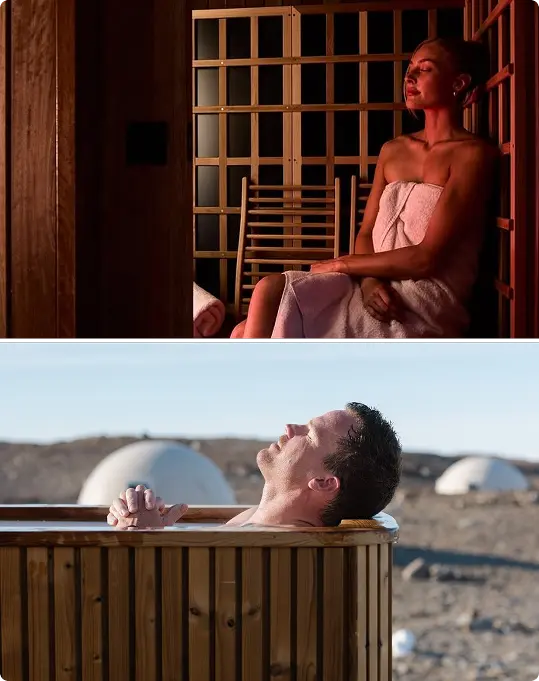
A Practical Rule for Timing
Chasing muscle growth? Skip cold immersion for at least a few hours after a hypertrophy-focused session, or move it to a separate day. Chasing recovery speed for tomorrow's session or event? Cold exposure after training is well supported for reducing soreness and perceived fatigue. Chasing the cardiovascular and longevity signal specifically? The heat side of the protocol is doing more of that work than the cold side, based on current human data.
Evidence Strength: A Straight Comparison
| Modality | Strongest evidence for | Evidence quality and overstated claims |
|---|---|---|
| Sauna / heat exposure | Cardiovascular mortality reduction, heat shock protein response, inflammation markers | Strong (large prospective cohorts, decades of follow-up). ‘Detox’ claims are overstated; sweating does not remove toxins in a meaningful clinical sense. |
| Cold water immersion | Acute soreness and fatigue reduction, brown fat activation, metabolic markers | Moderate (good short-term data, weaker long-term human trials). Anti-ageing and lifespan claims are overstated; it can also blunt hypertrophy when timed after strength training. |
| Air-based whole-body cryotherapy | Short-term inflammation and pain reduction, subjective recovery | Weaker than water immersion for equivalent claims. Marketing often borrows water-immersion trial data to describe air-based chambers. |
| Contrast (alternating) therapy | Musculoskeletal pain, swelling, range of motion, DOMS | Moderate and growing. No human longevity or lifespan-extension trials exist for the combined protocol specifically. |
Who Should Be Careful
Contrast therapy is not appropriate for everyone. Uncontrolled hypertension, cardiovascular disease, Raynaud's phenomenon, pregnancy, and certain skin or nerve conditions all warrant a conversation with your doctor before starting. Cold water immersion measurably raises blood pressure and drops heart rate on entry, which is exactly why cardiovascular screening matters before you commit to a regular practice, not after.
How We Approach It at Cryo SubZero
We run whole-body cryotherapy at −110°C alongside infrared sauna, and we are upfront with clients about which claims are earned and which are still marketing. If your goal is muscle growth, we will tell you to keep cold exposure away from your lifting sessions. If your goal is cardiovascular resilience and stress recovery, the heat protocol is doing the heavier lifting in the human data, and we will build your session around that.
Book a Session
Talk to the Cryo SubZero team about building a contrast therapy protocol around your recovery and training goals.
The Bottom Line
Contrast therapy earns its place in a recovery routine. The vascular pumping effect, the pain and swelling reduction, and the two genuinely distinct hormetic pathways from heat and cold are real and reasonably well studied. What it has not earned yet is the ‘longevity breakthrough’ framing that wellness marketing keeps attaching to it. Use it for what the evidence actually supports: faster recovery, better circulation, meaningful cardiovascular protection from the heat side, and a stress resilience benefit from the cold side. Time it around your training goals, not around what looks good on camera.
References
- Laukkanen T, Khan H, Zaccardi F, Laukkanen JA. Association Between Sauna Bathing and Fatal Cardiovascular and All-Cause Mortality Events. JAMA Internal Medicine. 2015;175(4):542–548. PubMed
- Kunutsor SK, Laukkanen T, Khan H, Willeit P, Zaccardi F, Laukkanen JA. Sauna bathing is associated with reduced cardiovascular mortality and improves risk prediction in men and women: a prospective cohort study. BMC Medicine. 2018;16:219. BMC Medicine
- Fyfe JJ, Broatch JR, Trewin AJ, et al. Cold water immersion attenuates anabolic signaling and skeletal muscle fiber hypertrophy, but not strength gain, following whole-body resistance training. Journal of Applied Physiology. 2019;127(5):1403–1418. PubMed
- Piñero A, et al. Throwing cold water on muscle growth: a systematic review with meta-analysis of the effects of postexercise cold water immersion on resistance training-induced hypertrophy. European Journal of Sport Science. 2024. European Journal of Sport Science
- Van Marken Lichtenbelt WD, et al. Cold-Activated Brown Adipose Tissue in Healthy Men. New England Journal of Medicine. 2009. Referenced via PET-CT brown adipose tissue activation findings.
- Mechanisms and Efficacy of Contrast Therapy for Musculoskeletal Painful Disease: A Scoping Review of Randomised Controlled Trials. 2025.
- Vaile J, Halson S, Gill N, Dawson B. Effect of hydrotherapy on the signs and symptoms of delayed onset muscle soreness. European Journal of Applied Physiology. 2008.